Tamarin Prover is a computer software program for formal verification of cryptographic protocols. It has been used to verify Transport Layer Security 1.3, ISO/IEC 9798, DNP3 Secure Authentication v5, WireGuard, and the PQ3 Messaging Protocol of Apple iMessage. Tamarin is an open source tool, written in Haskell, built as a successor to an older verification tool called Scyther. Tamarin has automatic proof features, but can also be self-guided. In Tamarin lemmas that representing security properties are defined. After changes are made to a protocol, Tamarin can verify if the security properties are maintained. The results of a Tamarin execution will either be a proof that the security property holds within the protocol, an example protocol run where the security property does not hold, or Tamarin could potentially fail to halt.
Educational robotics
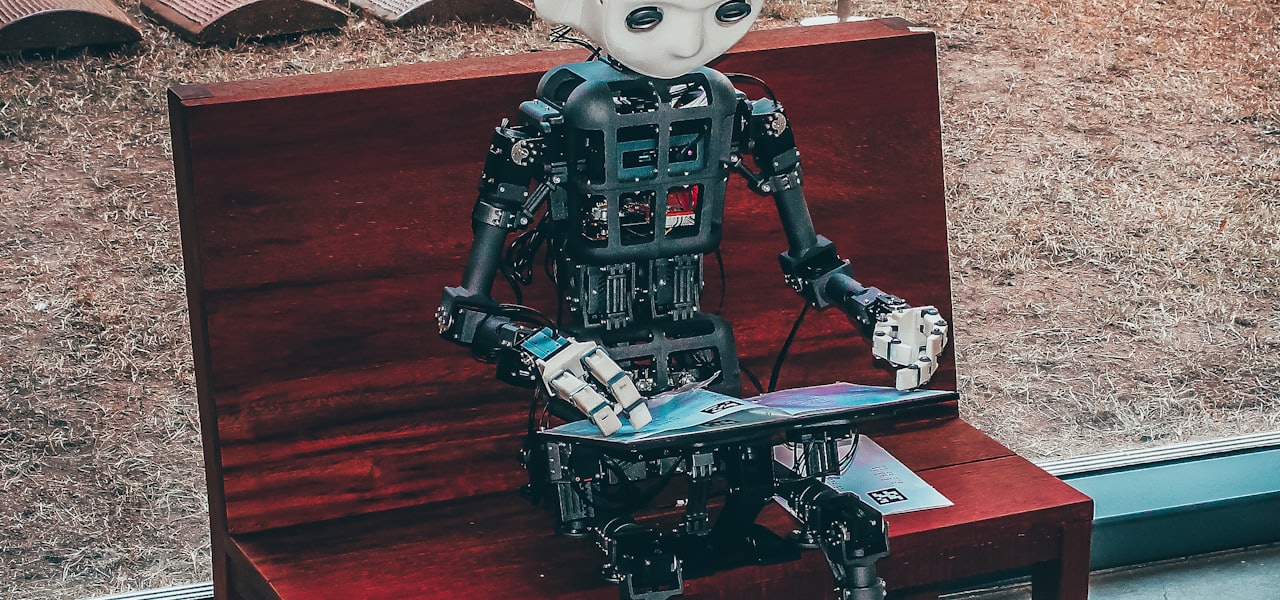
Educational robotics teaches the design, analysis, application and operation of robots. Robots include articulated robots, mobile robots or autonomous vehicles. Educational robotics can be taught from elementary school to graduate programs. Robotics may also be used to motivate and facilitate the instruction other, often foundational, topics such as computer programming, artificial intelligence or engineering design. == Education and training == Robotics engineers design robots, maintain them, develop new applications for them, and conduct research to expand the potential of robotics. Robots have become a popular educational tool in some middle and high schools, as well as in numerous youth summer camps, raising interest in programming, artificial intelligence and robotics among students. First-year computer science courses at several universities now include programming of a robot in addition to traditional software engineering-based coursework. == Category of Educational robotics == The categories of educational robots seen as having more than one category. It can be alienated into different categories based on their physical design and coding method. Generally they are categorised as arm robots, wheeled mobile robots and humanoid robots. Tangibly, coded robots uses a physical means of coding instead of the screens coding. === Initiatives in schools === Leachim, was a robot teacher programmed with the class curricular, as well as certain biographical information on the 40 students whom it was programmed to teach. Leachim could synthesize human speech using Diphone synthesis. It was invented by Michael J. Freeman in 1974 and was tested in a fourth grade classroom in the Bronx, New York. === Post-secondary degree programs === From approximately 1960 through 2005, robotics education at post-secondary institutions took place through elective courses, thesis experiences and design projects offered as part of degree programs in traditional academic disciplines, such as mechanical engineering, electrical engineering, industrial engineering or computer science. Since 2005, more universities have begun granting degrees in robotics as a discipline in its own right, often under the name "Robotic Engineering". Based on a 2015 web-based survey of robotics educators, the degree programs and their estimates annual graduates are listed alphabetically below. Note that only official degree programs where the word "robotics" appears on the transcript or diploma are listed here; whereas degree programs in traditional disciplines with course concentrations or thesis topics related to robotics are deliberately omitted. === Certification === The Robotics Certification Standards Alliance (RCSA) is an international robotics certification authority that confers various industry- and educational-related robotics certifications. === Summer robotics camp === Several summer camp programs include robotics as part of their core curriculum. In addition, youth summer robotics programs are frequently offered by celebrated museums such as the American Museum of Natural History and The Tech Museum of Innovation in Silicon Valley, CA, just to name a few. There are of benefits that come from attending robotics camps. It teaches students how to use teamwork, resilience and motivation, and decision-making. Students learn teamwork because most camps involve exciting activities requiring teamwork. Resilience and motivation is expected because by completing the challenging programs, students feel talented and accomplished after they complete the program. Also students are given unique situations making them make decisions to further their situation. === Educational robotics in special education === Educational robotics can be a useful tool in early and special education. According to a journal on new perspectives in science education, educational robotics can help to develop abilities that promote autonomy and assist their integration into society. Social and personal skills can also be developed through educational robotics. Using Lego Mindstorms NXT, schoolteachers were able to work with middle school aged children in order to develop programs and improve the children's social and personal skills. Additionally, problem solving skills and creativity were utilized through the creation of artwork and scenery to house the robots. Other studies show the benefits of educational robotics in special education as promoting superior cognitive functions, including executive functions. This can lead to an increased ability in "problem solving, reasoning and planning in typically developing preschool children." Through eight weeks of weekly forty-five-minute group sessions using the Bee-Bot, an increase in interest, attention, and interaction between both peers and adults was found in the school and preschool-aged children with Down Syndrome. This study suggests that educational robotics in the classroom can also lead to an improvement in visuo-spatial memory and mental planning. Furthermore, executive functions seemed to be possible in one child during this study.
BERT (language model)
Bidirectional encoder representations from transformers (BERT) is a language model introduced in October 2018 by researchers at Google. It learns to represent text as a sequence of vectors using self-supervised learning. It uses the encoder-only transformer architecture. BERT dramatically improved the state of the art for large language models. As of 2020, BERT is a ubiquitous baseline in natural language processing (NLP) experiments. BERT is trained by masked token prediction and next sentence prediction. With this training, BERT learns contextual, latent representations of tokens in their context, similar to ELMo and GPT-2. It found applications for many natural language processing tasks, such as coreference resolution and polysemy resolution. It improved on ELMo and spawned the study of "BERTology", which attempts to interpret what is learned by BERT. BERT was originally implemented in the English language at two model sizes, BERTBASE (110 million parameters) and BERTLARGE (340 million parameters). Both were trained on the Toronto BookCorpus (800M words) and English Wikipedia (2,500M words). The weights were released on GitHub. On March 11, 2020, 24 smaller models were released, the smallest being BERTTINY with just 4 million parameters. == Architecture == BERT is an "encoder-only" transformer architecture. At a high level, BERT consists of 4 modules: Tokenizer: This module converts a piece of English text into a sequence of integers ("tokens"). Embedding: This module converts the sequence of tokens into an array of real-valued vectors representing the tokens. It represents the conversion of discrete token types into a lower-dimensional Euclidean space. Encoder: a stack of Transformer blocks with self-attention, but without causal masking. Task head: This module converts the final representation vectors into one-shot encoded tokens again by producing a predicted probability distribution over the token types. It can be viewed as a simple decoder, decoding the latent representation into token types, or as an "un-embedding layer". The task head is necessary for pre-training, but it is often unnecessary for so-called "downstream tasks," such as question answering or sentiment classification. Instead, one removes the task head and replaces it with a newly initialized module suited for the task, and finetune the new module. The latent vector representation of the model is directly fed into this new module, allowing for sample-efficient transfer learning. === Embedding === This section describes the embedding used by BERTBASE. The other one, BERTLARGE, is similar, just larger. The tokenizer of BERT is WordPiece, which is a sub-word strategy like byte-pair encoding. Its vocabulary size is 30,000, and any token not appearing in its vocabulary is replaced by [UNK] ("unknown"). The first layer is the embedding layer, which contains three components: token type embeddings, position embeddings, and segment type embeddings. Token type: The token type is a standard embedding layer, translating a one-hot vector into a dense vector based on its token type. Position: The position embeddings are based on a token's position in the sequence. BERT uses absolute position embeddings, where each position in a sequence is mapped to a real-valued vector. Each dimension of the vector consists of a sinusoidal function that takes the position in the sequence as input. Segment type: Using a vocabulary of just 0 or 1, this embedding layer produces a dense vector based on whether the token belongs to the first or second text segment in that input. In other words, type-1 tokens are all tokens that appear after the [SEP] special token. All prior tokens are type-0. The three embedding vectors are added together representing the initial token representation as a function of these three pieces of information. After embedding, the vector representation is normalized using a LayerNorm operation, outputting a 768-dimensional vector for each input token. After this, the representation vectors are passed forward through 12 Transformer encoder blocks, and are decoded back to 30,000-dimensional vocabulary space using a basic affine transformation layer. === Architectural family === The encoder stack of BERT has 2 free parameters: L {\displaystyle L} , the number of layers, and H {\displaystyle H} , the hidden size. There are always H / 64 {\displaystyle H/64} self-attention heads, and the feed-forward/filter size is always 4 H {\displaystyle 4H} . By varying these two numbers, one obtains an entire family of BERT models. For BERT: the feed-forward size and filter size are synonymous. Both of them denote the number of dimensions in the middle layer of the feed-forward network. the hidden size and embedding size are synonymous. Both of them denote the number of real numbers used to represent a token. The notation for encoder stack is written as L/H. For example, BERTBASE is written as 12L/768H, BERTLARGE as 24L/1024H, and BERTTINY as 2L/128H. == Training == === Pre-training === BERT was pre-trained simultaneously on two tasks: Masked language modeling (MLM): In this task, BERT ingests a sequence of words, where one word may be randomly changed ("masked"), and BERT tries to predict the original words that had been changed. For example, in the sentence "The cat sat on the [MASK]," BERT would need to predict "mat." This helps BERT learn bidirectional context, meaning it understands the relationships between words not just from left to right or right to left but from both directions at the same time. Next sentence prediction (NSP): In this task, BERT is trained to predict whether one sentence logically follows another. For example, given two sentences, "The cat sat on the mat" and "It was a sunny day", BERT has to decide if the second sentence is a valid continuation of the first one. This helps BERT understand relationships between sentences, which is important for tasks like question answering or document classification. ==== Masked language modeling ==== In masked language modeling, 15% of tokens would be randomly selected for masked-prediction task, and the training objective was to predict the masked token given its context. In more detail, the selected token is: replaced with a [MASK] token with probability 80%, replaced with a random word token with probability 10%, not replaced with probability 10%. The reason not all selected tokens are masked is to avoid the dataset shift problem. The dataset shift problem arises when the distribution of inputs seen during training differs significantly from the distribution encountered during inference. A trained BERT model might be applied to word representation (like Word2Vec), where it would be run over sentences not containing any [MASK] tokens. It is later found that more diverse training objectives are generally better. As an illustrative example, consider the sentence "my dog is cute". It would first be divided into tokens like "my1 dog2 is3 cute4". Then a random token in the sentence would be picked. Let it be the 4th one "cute4". Next, there would be three possibilities: with probability 80%, the chosen token is masked, resulting in "my1 dog2 is3 [MASK]4"; with probability 10%, the chosen token is replaced by a uniformly sampled random token, such as "happy", resulting in "my1 dog2 is3 happy4"; with probability 10%, nothing is done, resulting in "my1 dog2 is3 cute4". After processing the input text, the model's 4th output vector is passed to its decoder layer, which outputs a probability distribution over its 30,000-dimensional vocabulary space. ==== Next sentence prediction ==== Given two sentences, the model predicts if they appear sequentially in the training corpus, outputting either [IsNext] or [NotNext]. During training, the algorithm sometimes samples two sentences from a single continuous span in the training corpus, while at other times, it samples two sentences from two discontinuous spans. The first sentence starts with a special token, [CLS] (for "classify"). The two sentences are separated by another special token, [SEP] (for "separate"). After processing the two sentences, the final vector for the [CLS] token is passed to a linear layer for binary classification into [IsNext] and [NotNext]. For example: Given "[CLS] my dog is cute [SEP] he likes playing [SEP]", the model should predict [IsNext]. Given "[CLS] my dog is cute [SEP] how do magnets work [SEP]", the model should predict [NotNext]. === Fine-tuning === BERT is meant as a general pretrained model for various applications in natural language processing. That is, after pre-training, BERT can be fine-tuned with fewer resources on smaller datasets to optimize its performance on specific tasks such as natural language inference and text classification, and sequence-to-sequence-based language generation tasks such as question answering and conversational response generation. The original BERT paper published results demonstrating that a small amount of fine
ChromaDB
Chroma or ChromaDB is open-source data infrastructure tailored to applications with large language models. Its headquarters are in San Francisco. In April 2023, it raised 18 million US dollars as seed funding. ChromaDB has been used in academic studies on artificial intelligence, particularly as part of the tech stack for retrieval-augmented generation.
Computational semantics
Computational semantics is a subfield of computational linguistics. Its goal is to elucidate the cognitive mechanisms supporting the generation and interpretation of meaning in humans. It usually involves the creation of computational models that simulate particular semantic phenomena, and the evaluation of those models against data from human participants. While computational semantics is a scientific field, it has many applications in real-world settings and substantially overlaps with Artificial Intelligence. Broadly speaking, the discipline can be subdivided into areas that mirror the internal organization of linguistics. For example, lexical semantics and frame semantics have active research communities within computational linguistics. Some popular methodologies are also strongly inspired by traditional linguistics. Most prominently, the area of distributional semantics, which underpins investigations into embeddings and the internals of Large Language Models, has roots in the work of Zellig Harris. Some traditional topics of interest in computational semantics are: construction of meaning representations, semantic underspecification, anaphora resolution, presupposition projection, and quantifier scope resolution. Methods employed usually draw from formal semantics or statistical semantics. Computational semantics has points of contact with the areas of lexical semantics (word-sense disambiguation and semantic role labeling), discourse semantics, knowledge representation and automated reasoning (in particular, automated theorem proving). Since 1999 there has been an ACL special interest group on computational semantics, SIGSEM.
Group of Governmental Experts on Lethal Autonomous Weapons Systems
The Group of Governmental Experts on Lethal Autonomous Weapons Systems, commonly known as the GGE on LAWS, refers to a group of governmental experts established under the framework of the Convention on Certain Conventional Weapons (CCW), a United Nations arms control framework. The group examines legal, ethical, societal and moral questions that arise from the increased use of autonomous robots to carry weapons and to be programmed to engage in combat in various situations that might arise, including battles between countries, or in patrolling border areas or sensitive areas, or other similar roles. As of 18 March 2025, the Convention on Certain Conventional Weapons had 128 High Contracting Parties. In the Geneva Conventions, the term "High Contracting Parties" refers to the states that have joined the conventions and are therefore bound to uphold them. Among the countries that have joined are states with tense relations or ongoing armed conflict with one another, including Russia and Ukraine, Israel and the State of Palestine, and Pakistan and Afghanistan. == Background == In 2013, the Meeting of State Parties to the Convention on Certain Conventional Weapons agreed on a mandate on lethal autonomous weapon systems and tasked its chairperson with convening an informal Meeting of Experts to discuss issues related to emerging technologies in the area of LAWS. Those informal Meetings of Experts were then held in 2014, 2015 and 2016, and their reports fed into subsequent meetings of the High Contracting Parties. At the Fifth CCW Review Conference in 2016, the High Contracting Parties decided to establish an open-ended Group of Governmental Experts on emerging technologies in the area of LAWS, building on the earlier expert meetings. Since then, the group has been reconvened annually. In 2023, the Meeting of the High Contracting Parties to the CCW decided that the GGE on LAWS would continue its work in 2024 and 2025. The group was tasked with developing, by consensus, elements of a possible instrument, without predetermining its form, as well as other measures addressing lethal autonomous weapon systems, drawing on existing CCW protocols, earlier recommendations, state proposals, and legal, military, and technological expertise. == 2024 == In 2024, the GGE met twice, and the group was chaired by Robert in den Bosch, the Netherlands' disarmament ambassador. The 2024 Meeting of the High Contracting Parties decided that the group would meet for 10 days in 2025, in two five-day sessions, and reaffirmed its mandate to continue work by consensus on possible elements of an instrument and other measures addressing lethal autonomous weapon systems. == 2025 == At its first 2025 session, held in Geneva from 3 to 7 March 2025, the Group of Governmental Experts on Lethal Autonomous Weapon Systems discussed revisions to the chair's rolling text. The text was structured into five sections, or "boxes", though delegates held differing views on whether headings were useful or appropriate. Broadly, the discussions covered the characterization of lethal autonomous weapon systems, the application of international humanitarian law, possible prohibitions and regulations, legal review, and questions of accountability and responsibility. At its second session, held from 1 to 5 September 2025, delegations continued work on the chair's rolling text, which set out elements of a possible instrument and was organized into five thematic "boxes". == 2026 == === Developments before the 2026 session === A few weeks before the meeting, autonomous weapons drew renewed attention when the United States pressured Anthropic to revise the terms of use for its AI model Claude. Anthropic prohibited the model's use for mass domestic surveillance and for fully autonomous weapons operating without human oversight, while reports also emerged that OpenAI had reached an agreement with the U.S. Department of War for the use of its AI models, reportedly stipulating that they would not independently direct autonomous weapons where human control was required. The U.S. military nevertheless continued to use Claude during its war on Iran, and there was increasing alarm about the use of AI-assisted semi-autonomous weapons in conflicts including those in Ukraine, Sudan, Gaza, and Iran. Before the start of the sessions, Robert in den Bosch, as chair, warned that progress was urgent because technological developments were moving quickly. At the same time, although states agreed that international humanitarian law applied to LAWS, specific internationally binding standards governing such systems remained largely absent. A key divide before the session was that Russia and the United States opposed new legally binding instruments, while other states argued that new rules were necessary. According to Robert in den Bosch, the talks could lead to new rules, amendments to an existing convention, or a new treaty. === First session === From 2 to 6 March 2026, the group held its penultimate session under the group's three-year mandate. Delegations discussed the chair's rolling draft text, circulated in December 2025, on elements of a possible instrument or other measures concerning lethal autonomous weapon systems. In revised text circulated by the chair on 5 March 2026, a lethal autonomous weapon system was characterized as "a functionally integrated combination of one or more weapons and technological components, that can identify, select, and engage a target, without intervention by a human operator in the execution of these tasks". The text was divided into five boxes to structure discussion. During the session, delegates conducted a first reading of the draft text, and the chair later circulated revised language for several sections. Informal consultations were also held. According to campaign groups and participating observers, support grew during the week for moving to negotiations on the basis of the rolling text, with more than 70 states said to support that step by the end of the session, though some participants warned that attempts to bridge differences risked blurring the group's core purpose. The International Committee of the Red Cross argued that the text should not only restate existing international humanitarian law, but also clarify how those rules apply to autonomous weapons and set out additional measures tailored to the specific challenges such systems raise. Stop Killer Robots likewise emphasized the need to preserve meaningful human judgment and control over increasingly autonomous systems. During the discussions, the U.S. delegation opposed the term "human control" and reportedly proposed the alternative phrase "good faith human judgment and care". Other delegations rejected that wording as too weak, while many states continued to insist that meaningful human control over weapon systems remained essential.
Harris corner detector
The Harris corner detector is a corner detection operator that is commonly used in computer vision algorithms to extract corners and infer features of an image. It was first introduced by Chris Harris and Mike Stephens in 1988 upon the improvement of Moravec's corner detector. Compared to its predecessor, Harris' corner detector takes the differential of the corner score into account with reference to direction directly, instead of using shifting patches for every 45 degree angles, and has been proved to be more accurate in distinguishing between edges and corners. Since then, it has been improved and adopted in many algorithms to preprocess images for subsequent applications. == Introduction == A corner is a point whose local neighborhood stands in two dominant and different edge directions. In other words, a corner can be interpreted as the junction of two edges, where an edge is a sudden change in image brightness. Corners are the important features in the image, and they are generally termed as interest points which are invariant to translation, rotation and illumination. Although corners are only a small percentage of the image, they contain the most important features in restoring image information, and they can be used to minimize the amount of processed data for motion tracking, image stitching, building 2D mosaics, stereo vision, image representation and other related computer vision areas. In order to capture the corners from the image, researchers have proposed many different corner detectors including the Kanade-Lucas-Tomasi (KLT) operator and the Harris operator which are most simple, efficient and reliable for use in corner detection. These two popular methodologies are both closely associated with and based on the local structure matrix. Compared to the Kanade-Lucas-Tomasi corner detector, the Harris corner detector provides good repeatability under changing illumination and rotation, and therefore, it is more often used in stereo matching and image database retrieval. Although there still exist drawbacks and limitations, the Harris corner detector is still an important and fundamental technique for many computer vision applications. == Development of Harris corner detection algorithm == Source: Without loss of generality, we will assume a grayscale 2-dimensional image is used. Let this image be given by I {\displaystyle I} . Consider taking an image patch ( x , y ) ∈ W {\displaystyle (x,y)\in W} (window) and shifting it by ( Δ x , Δ y ) {\displaystyle (\Delta x,\Delta y)} . The sum of squared differences (SSD) between these two patches, denoted f {\displaystyle f} , is given by: f ( Δ x , Δ y ) = ∑ ( x k , y k ) ∈ W ( I ( x k , y k ) − I ( x k + Δ x , y k + Δ y ) ) 2 {\displaystyle f(\Delta x,\Delta y)={\underset {(x_{k},y_{k})\in W}{\sum }}\left(I(x_{k},y_{k})-I(x_{k}+\Delta x,y_{k}+\Delta y)\right)^{2}} I ( x + Δ x , y + Δ y ) {\displaystyle I(x+\Delta x,y+\Delta y)} can be approximated by a Taylor expansion. Let I x {\displaystyle I_{x}} and I y {\displaystyle I_{y}} be the partial derivatives of I {\displaystyle I} , such that I ( x + Δ x , y + Δ y ) ≈ I ( x , y ) + I x ( x , y ) Δ x + I y ( x , y ) Δ y {\displaystyle I(x+\Delta x,y+\Delta y)\approx I(x,y)+I_{x}(x,y)\Delta x+I_{y}(x,y)\Delta y} This produces the approximation f ( Δ x , Δ y ) ≈ ∑ ( x , y ) ∈ W ( I x ( x , y ) Δ x + I y ( x , y ) Δ y ) 2 , {\displaystyle f(\Delta x,\Delta y)\approx {\underset {(x,y)\in W}{\sum }}\left(I_{x}(x,y)\Delta x+I_{y}(x,y)\Delta y\right)^{2},} which can be written in matrix form: f ( Δ x , Δ y ) ≈ ( Δ x Δ y ) M ( Δ x Δ y ) , {\displaystyle f(\Delta x,\Delta y)\approx {\begin{pmatrix}\Delta x&\Delta y\end{pmatrix}}M{\begin{pmatrix}\Delta x\\\Delta y\end{pmatrix}},} where M is the structure tensor, M = ∑ ( x , y ) ∈ W [ I x 2 I x I y I x I y I y 2 ] = [ ∑ ( x , y ) ∈ W I x 2 ∑ ( x , y ) ∈ W I x I y ∑ ( x , y ) ∈ W I x I y ∑ ( x , y ) ∈ W I y 2 ] {\displaystyle M={\underset {(x,y)\in W}{\sum }}{\begin{bmatrix}I_{x}^{2}&I_{x}I_{y}\\I_{x}I_{y}&I_{y}^{2}\end{bmatrix}}={\begin{bmatrix}{\underset {(x,y)\in W}{\sum }}I_{x}^{2}&{\underset {(x,y)\in W}{\sum }}I_{x}I_{y}\\{\underset {(x,y)\in W}{\sum }}I_{x}I_{y}&{\underset {(x,y)\in W}{\sum }}I_{y}^{2}\end{bmatrix}}} == Process of Harris corner detection algorithm == Commonly, Harris corner detector algorithm can be divided into five steps. Color to grayscale Spatial derivative calculation Structure tensor setup Harris response calculation Non-maximum suppression === Color to grayscale === If we use Harris corner detector in a color image, the first step is to convert it into a grayscale image, which will enhance the processing speed. The value of the gray scale pixel can be computed as a weighted sums of the values R, B and G of the color image, ∑ C ∈ { R , G , B } w C ⋅ C {\displaystyle \sum _{C\,\in \,\{R,G,B\}}w_{C}\cdot C} , where, e.g., w R = 0.299 , w G = 0.587 , w B = 1 − ( w R + w G ) = 0.114. {\displaystyle w_{R}=0.299,\ w_{G}=0.587,\ w_{B}=1-(w_{R}+w_{G})=0.114.} === Spatial derivative calculation === Next, we are going to find the derivative with respect to x and the derivative with respect to y, I x ( x , y ) {\displaystyle I_{x}(x,y)} and I y ( x , y ) {\displaystyle I_{y}(x,y)} . This can be approximated by applying Sobel operators. === Structure tensor setup === With I x ( x , y ) {\displaystyle I_{x}(x,y)} , I y ( x , y ) {\displaystyle I_{y}(x,y)} , we can construct the structure tensor M {\displaystyle M} . === Harris response calculation === For x ≪ y {\displaystyle x\ll y} , one has x ⋅ y x + y = x 1 1 + x / y ≈ x . {\displaystyle {\tfrac {x\cdot y}{x+y}}=x{\tfrac {1}{1+x/y}}\approx x.} In this step, we compute the smallest eigenvalue of the structure tensor using that approximation: λ min ≈ λ 1 λ 2 ( λ 1 + λ 2 ) = det ( M ) tr ( M ) {\displaystyle \lambda _{\min }\approx {\frac {\lambda _{1}\lambda _{2}}{(\lambda _{1}+\lambda _{2})}}={\frac {\det(M)}{\operatorname {tr} (M)}}} with the trace t r ( M ) = m 11 + m 22 {\displaystyle \mathrm {tr} (M)=m_{11}+m_{22}} . Another commonly used Harris response calculation is shown as below, R = λ 1 λ 2 − k ( λ 1 + λ 2 ) 2 = det ( M ) − k tr ( M ) 2 {\displaystyle R=\lambda _{1}\lambda _{2}-k(\lambda _{1}+\lambda _{2})^{2}=\det(M)-k\operatorname {tr} (M)^{2}} where k {\displaystyle k} is an empirically determined constant; k ∈ [ 0.04 , 0.06 ] {\displaystyle k\in [0.04,0.06]} . === Non-maximum suppression === In order to pick up the optimal values to indicate corners, we find the local maxima as corners within the window which is a 3 by 3 filter. == Improvement == Sources: Harris-Laplace Corner Detector Differential Morphological Decomposition Based Corner Detector Multi-scale Bilateral Structure Tensor Based Corner Detector == Applications == Image Alignment, Stitching and Registration 2D Mosaics Creation 3D Scene Modeling and Reconstruction Motion Detection Object Recognition Image Indexing and Content-based Retrieval Video Tracking